
Dark Limewash Paint — Moody Walls That Make a Statement
Dark Limewash Paint — Moody Walls That Make a Statement
Dark limewash paint is one of the most striking ways to transform an interior. While light, neutral limewash tones are known for their softness, darker shades bring depth, contrast, and a bold, atmospheric mood.
If you’re looking to create a space that feels dramatic but still natural, dark limewash walls are the perfect solution. They combine texture with rich color, creating interiors that feel layered, sophisticated, and intentional.
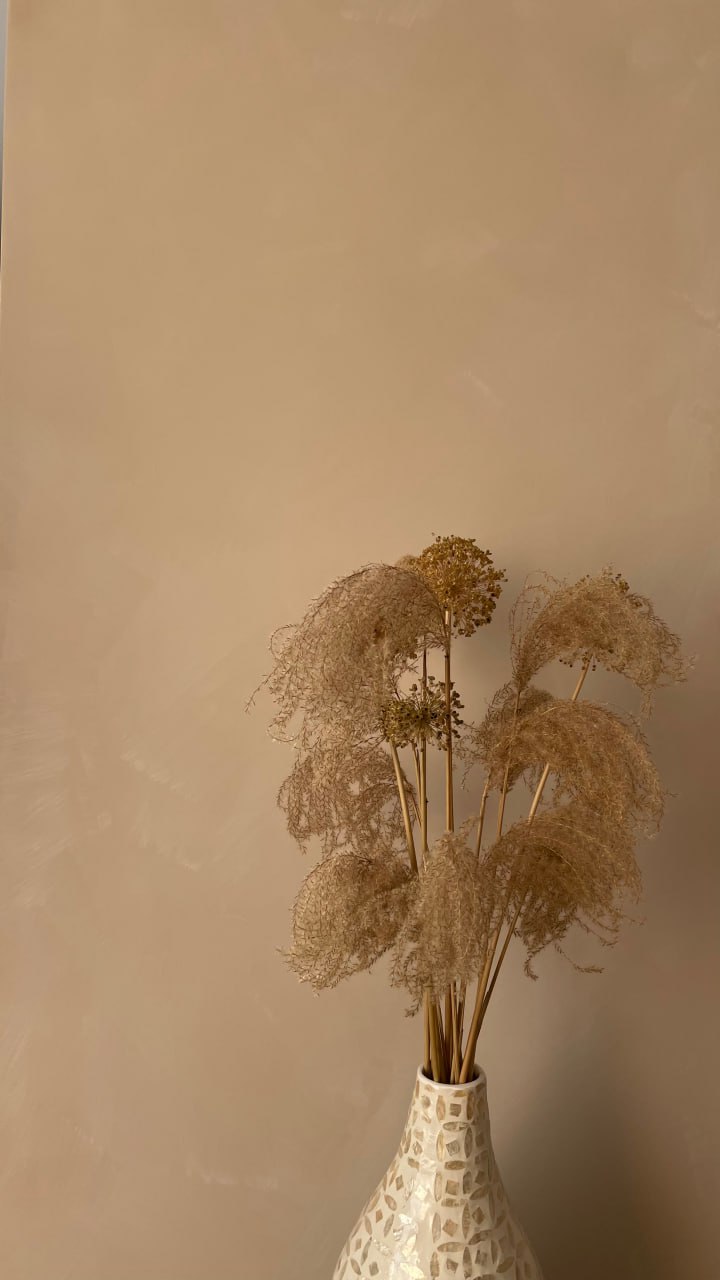
In this guide, you’ll learn how to use dark limewash paint, which shades work best, where to apply it, and how to avoid common mistakes.
What Makes Dark Limewash Different?
Dark limewash isn’t just “darker paint.” It behaves differently than standard finishes.
Because of its mineral composition and application technique, limewash creates:
- Subtle tonal variations
- Soft cloud-like movement
- Matte, chalky texture
- Light absorption instead of reflection
When you go dark, these effects become even more visible. Instead of a flat black or grey wall, you get depth and visual movement.
Popular Dark Limewash Colors
Choosing the right shade is key. Dark limewash colors can feel either cozy or heavy depending on the tone.
Top dark limewash shades include:
- Charcoal grey limewash – modern, balanced, and versatile
- Deep taupe – warm and soft, less harsh than grey
- Dark olive – natural and earthy
- Smoky blue-grey – calm but moody
- Graphite – bold and contemporary
What to avoid:
- Pure black (often too flat with limewash)
- Very cold greys (can feel sterile)
- Highly saturated tones (lose the natural look)
The best dark limewash colors are slightly muted and complex.
Why People Choose Moody Limewash Walls
Dark limewash walls aren’t for everyone—but when done right, they create a powerful effect.
Reasons people choose dark limewash:
- Creates a strong visual statement
- Adds depth to simple spaces
- Feels more “designed” than plain paint
- Pairs well with natural materials
- Works in both modern and classic interiors
It’s especially popular in spaces where atmosphere matters more than brightness.
Best Rooms for Dark Limewash Paint
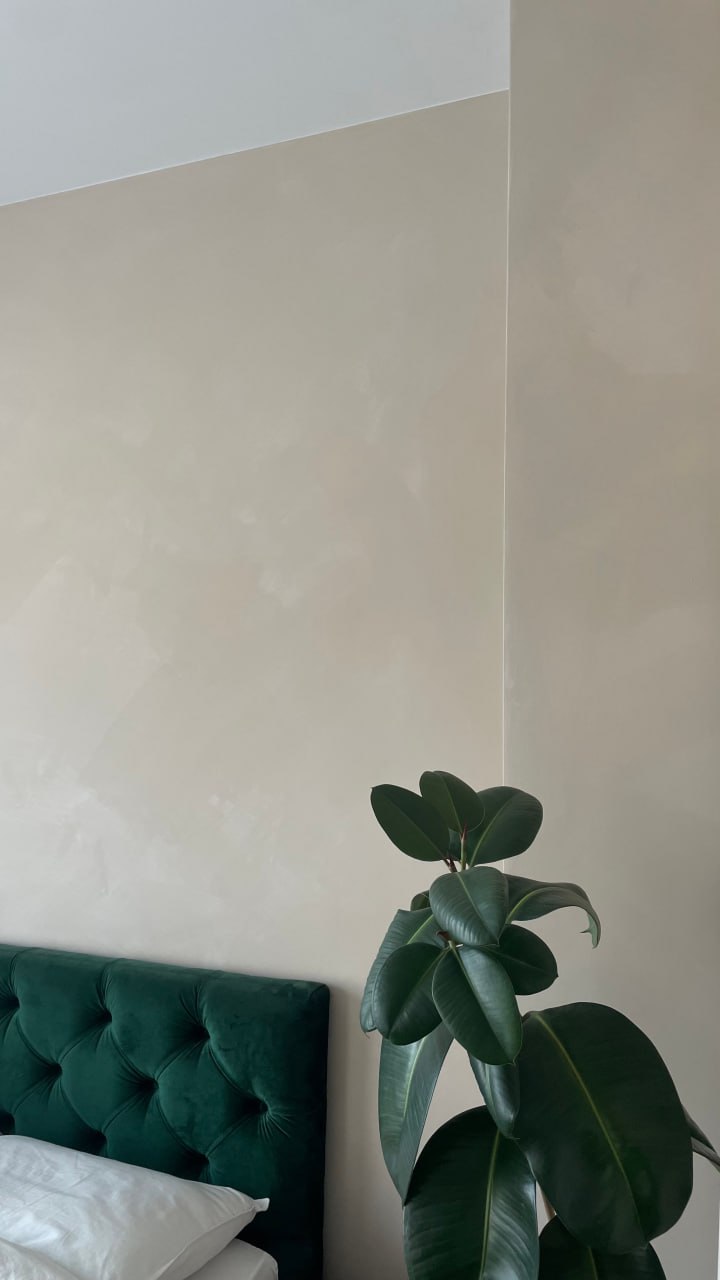
Not every room needs dark walls—but some benefit from them significantly.
Ideal spaces:
- Living rooms
- Bedrooms
- Dining rooms
- Home offices
- Accent walls in open spaces
Rooms where you should be careful:
- Small bathrooms with no natural light
- Narrow hallways
- Low-ceiling spaces
Dark limewash works best when the space has enough light to balance it.
How Lighting Affects Dark Limewash Walls
Lighting is everything with dark finishes.
In natural light:
- Texture becomes more visible
- Color shifts slightly throughout the day
In artificial light:
- Warm lighting softens the darkness
- Cool lighting can make it feel colder
Best lighting setup:
- Warm light (2700K–3000K)
- Layered lighting (ambient + accent)
- Wall lighting to highlight texture
Avoid:
- Harsh overhead lighting
- Single light source
How to Style Dark Limewash Interiors
Dark walls need the right styling to feel balanced.
Best combinations:
- Light wood furniture
- Stone or marble surfaces
- Neutral textiles (linen, cotton)
- Metal accents (brass, black, chrome)
Color pairing ideas:
- Charcoal + warm beige
- Dark grey + white accents
- Olive + natural wood
- Graphite + gold details
Keep the palette simple. Let the wall be the focal point.
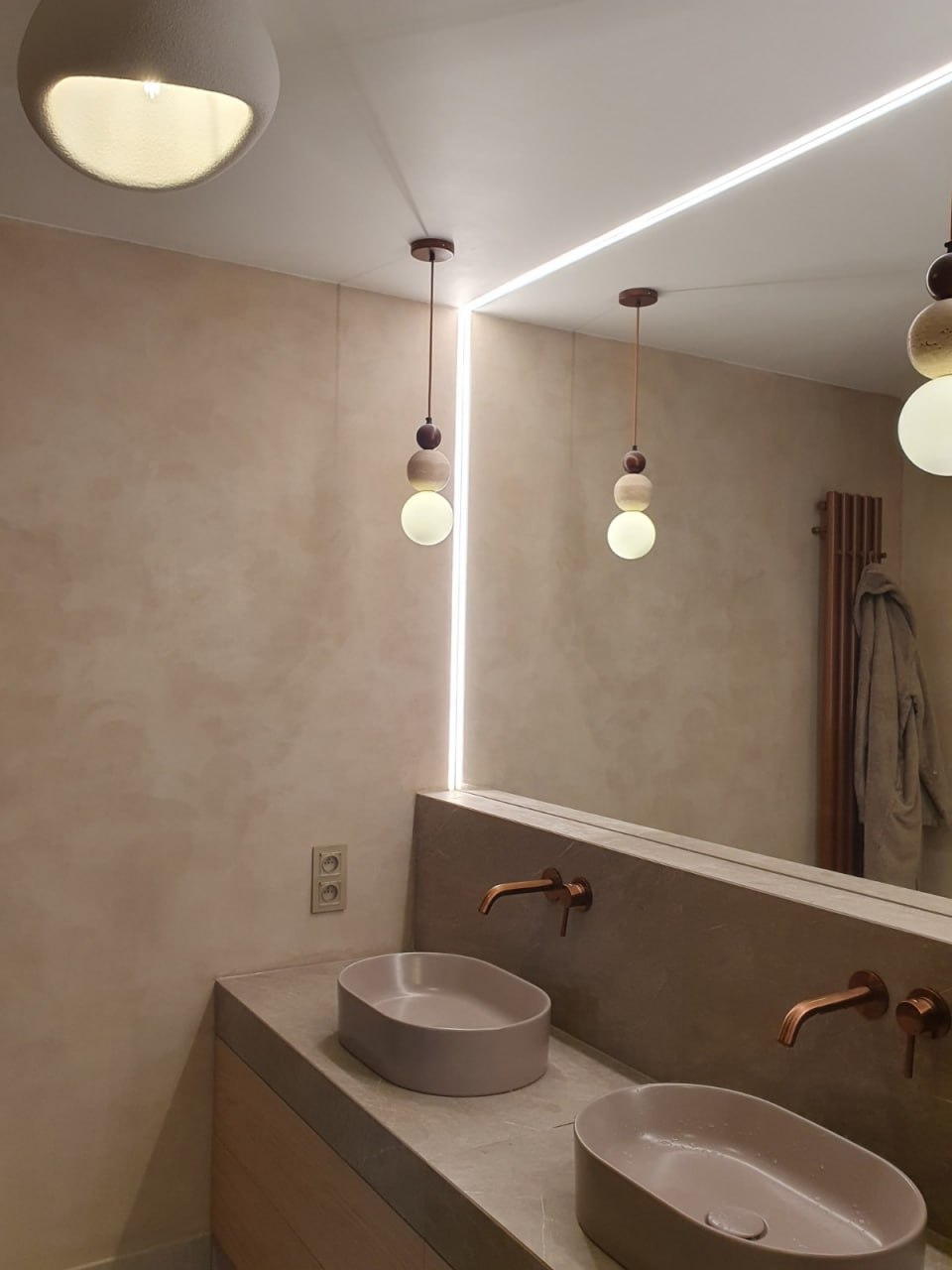
Dark Grey Limewash — The Most Versatile Option
If you’re unsure where to start, dark grey limewash is the safest choice.
Why it works:
- Neutral and easy to match
- Modern but not too bold
- Works in small and large spaces
- Pairs with almost any material
It gives you the “moody” effect without overwhelming the space.
Application Effect — What to Expect
Dark limewash walls will never look perfectly uniform—and that’s intentional.
Expect:
- Visible brush strokes
- Subtle color variation
- Soft texture changes across the wall
This is what creates the signature limewash look.
If you want a perfectly smooth finish, limewash is not the right product.
Common Mistakes with Dark Limewash
Dark colors amplify mistakes, so planning matters.
Avoid these:
- Choosing too dark a shade for a small space
- Ignoring lighting conditions
- Using too many competing colors
- Expecting uniform coverage
- Not testing the color first
Always test before committing to a full wall.
Is Dark Limewash Hard to Maintain?
Maintenance is similar to lighter limewash—but slightly more visible.
Good to know:
- Marks can be more noticeable
- Gentle cleaning is recommended
- Avoid harsh chemicals
- Touch-ups blend well due to texture
Over time, natural wear can actually enhance the look.
When to Choose Dark Limewash Over Light
Go dark if you want:
- A bold, statement wall
- A cozy, enclosed feeling
- A more dramatic interior
- Stronger contrast with furniture
Stick to light tones if you want:
- Bright, airy spaces
- Minimal contrast
- Scandinavian-style interiors